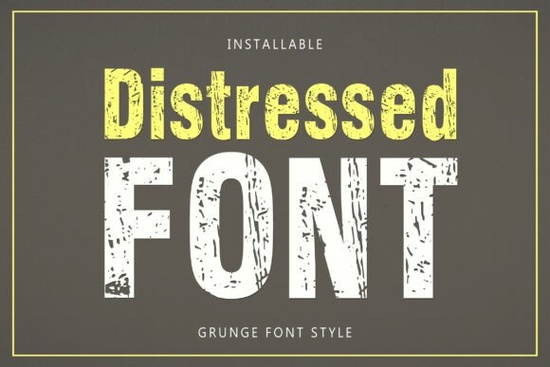
If you're working on a design that needs to look rugged, vintage, or authentically worn-in without sacrificing readability the Distressed Font is worth a closer look. This bold, textured typeface brings subtle imperfections and rough edges to every letterform, giving your projects an immediate sense of history and grit. Whether you're designing retro logos, grunge-inspired posters, army-themed apparel, or even packaging for artisanal goods, this font adds character without overwhelming your message.
What makes a distressed font work well in real projects?
A good distressed typeface walks a fine line: it should look aged or weathered but still be easy to read at a glance. The Distressed Font achieves this by keeping consistent letter spacing and clear shapes beneath the surface texture. Unlike overly chaotic grunge fonts that can become illegible, this one maintains structure while adding just enough visual noise to feel authentic.
For print-on-demand sellers, that balance is crucial. Customers scrolling through a marketplace need to instantly understand your design even if it’s printed on a faded-looking t-shirt or coffee mug. Similarly, small businesses using this font for signage or labels benefit from its hand-worn charm without confusing their audience.
Where does this font shine the most?
Here are a few practical uses where the Distressed Font consistently delivers:
- Retro branding – Think diners, record stores, or craft breweries wanting a nostalgic vibe.
- Apparel design – Especially for military, motorcycle, or workwear themes.
- Event posters – Music festivals, garage sales, or vintage markets.
- DIY crafts – Wood signs, stencils, or handmade greeting cards with a rustic touch.
- Social media graphics – When you want to convey authenticity or rebellion without going full punk.
It’s also worth noting that this font pairs well with cleaner sans-serifs or minimalist scripts. For example, you might use Distressed Font for a headline and complement it with something like Jelly Puff for subtext to create contrast between rough and soft elements.
How does it compare to other display fonts?
Not all display fonts aim for the same mood. If you’re exploring options, consider how each serves your project’s tone:
- Wiggle Whistle leans playful and bouncy great for kids’ products or whimsical branding.
- Crayons mimics hand-drawn marker lines, ideal for educational or casual designs.
- Gemstone offers elegant, decorative flair suited for luxury or wedding themes.
In contrast, the Distressed Font occupies a grittier niche. It’s not trying to be cute or fancy it’s built for projects that need to look like they’ve seen some life. That specificity is what makes it reliable when the aesthetic calls for authenticity over polish.
If you’d like to see how it stacks up against similar styles on the platform, you can browse the full collection at Distressed Font.
Tips for using distressed fonts effectively
Because of their texture-heavy nature, distressed fonts can sometimes get lost in busy layouts or low-resolution prints. Keep these best practices in mind:
- Avoid tiny sizes. The details that give the font its character disappear below 18–20pt in print or web graphics.
- Use generous spacing. Slightly increased letter-spacing (tracking) helps maintain legibility, especially in all-caps settings.
- Limit use to headlines or short phrases. These fonts aren’t meant for body text stick to titles, logos, or callouts.
- Test on your final medium. If you’re printing on fabric or kraft paper, do a physical proof to ensure the texture reads as intended.
Also, remember that less is often more. One strong word set in Distressed Font can anchor a whole design better than multiple competing distressed elements.
Ready to try it?
If your next project calls for a typeface with soul and maybe a few battle scars the Distressed Font offers a versatile, readable option that doesn’t sacrifice personality. It’s especially useful if you’re building a brand identity around heritage, rebellion, or craftsmanship.
Before you download, ask yourself:
- Does my audience connect with vintage or rugged aesthetics?
- Will this font support my message or distract from it?
- Have I checked how it renders on my intended output (screen, cotton, vinyl, etc.)?
Answering “yes” to those questions means you’re likely making a thoughtful, purpose-driven choice not just picking a trendy font. And that’s exactly how great design happens.
Learn More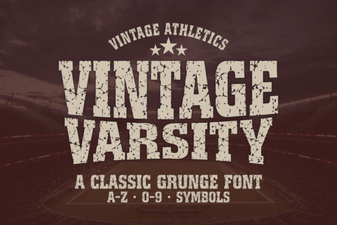 Vintage Varsity Fonts for Sports and Club Projects
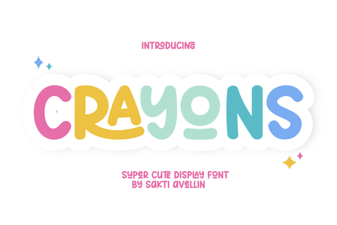 Bringing Childhood Creativity to Digital Design
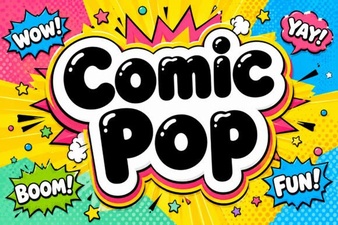 Fun Comic Fonts for Creative Projects
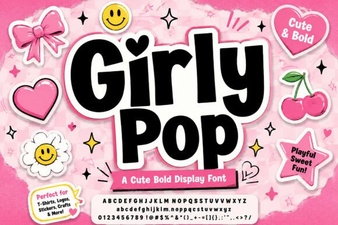 Creative Girly Pop Fonts for Modern Design
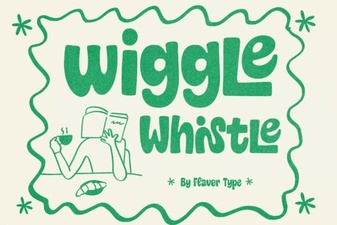 Introducing Wiggle Whistle: a Playful Display Font
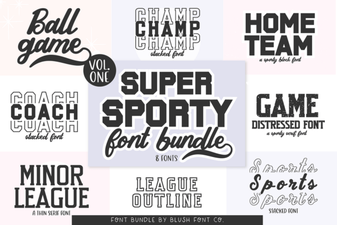 Super Sport Bundle Font for Modern Design Projects